Gift Registry for Tanagra
An omnichannel luxury registry platform connecting online curation with in-store discovery, designed for two distinct user types across weddings and milestone celebrations in the GCC.
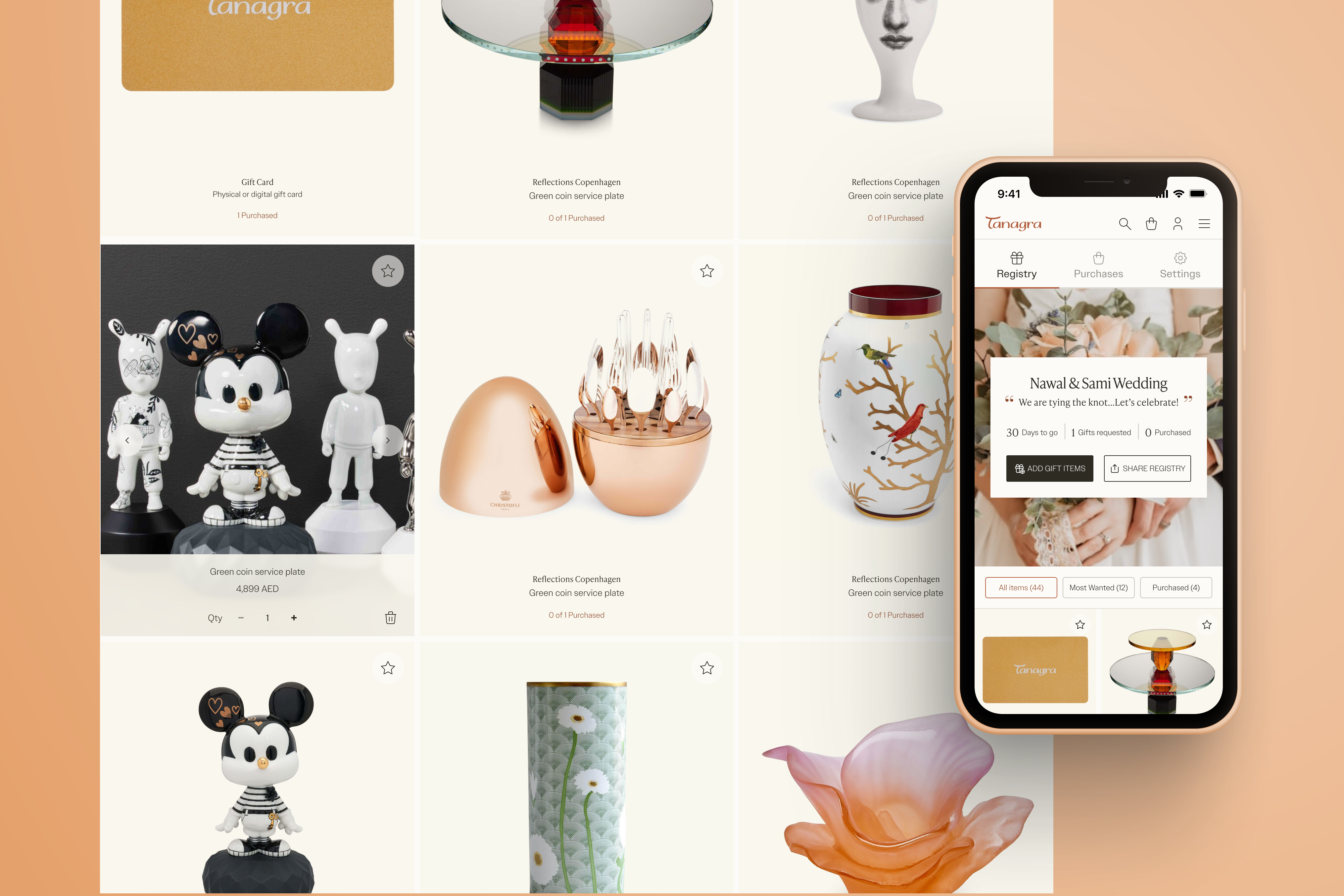
A luxury brand missing its biggest gifting moments
Tanagra is a premium homeware and gifting destination operating across the GCC through both digital and physical boutiques. Despite a curated product catalogue and a high-end in-store experience, it had no modern registry solution. That meant it was consistently absent from the most significant gifting occasions in the region: weddings, engagements, and housewarmings.
The existing registry was outdated, rarely used, and had no connection between in-store discovery and online management. Customers planning milestone celebrations were being pushed to larger retailers that offered the functionality Tanagra lacked.
Baseline Data (2022)
Two users with very different needs
We conducted interviews with 2 couples planning weddings and approximately 10 guests across separate registries. We also studied regional and global competitors including Amazon, The Knot, Zola, and Myregistrylist.ae to understand where the GCC market diverged from Western registry conventions.
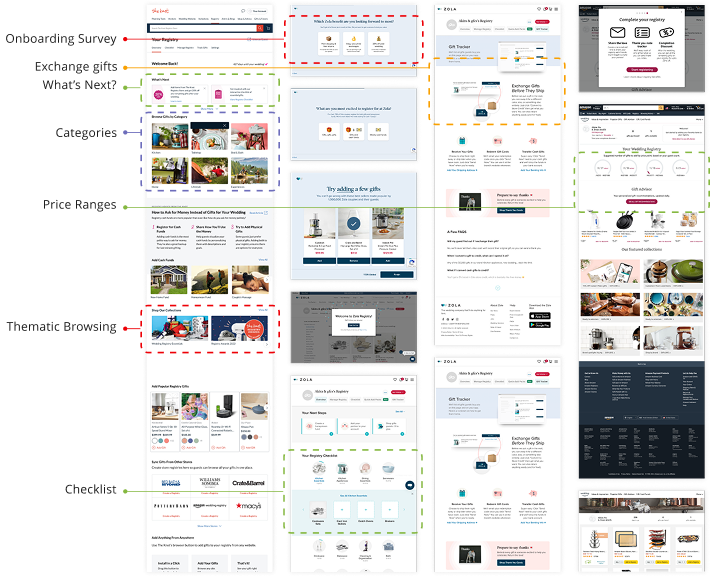
Annotated competitor audit across global and regional registry platforms
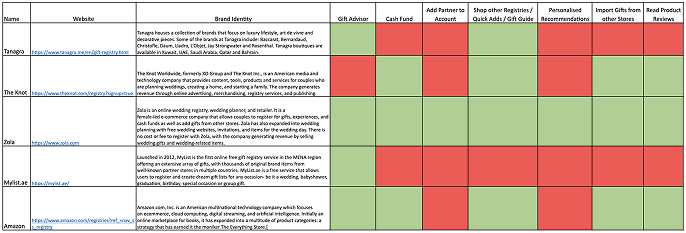
Feature comparison table identifying gaps in Tanagra's existing offering
The research surfaced two user groups with fundamentally different goals:
- Registry owners (couples) needed a way to curate a wishlist that felt premium, share it easily, and track what had been purchased, without the anxiety of duplicate gifts.
- Guests needed clarity on what was still available, confidence that their purchase was the right choice, and options across a range of price points.
Key pain points that shaped every subsequent design decision:
- Guests do not know what to buy and fear purchasing something already received
- Registry creation was perceived as too complicated to be worth doing
- Couples wanted all gifts to arrive at the same time, not in waves
- Gift options for different guest budgets were too limited on luxury platforms
Cutting complexity through flow reduction
I owned the registry owner flow; my co-designer owned the guest purchase experience. This division of ownership let us move faster while ensuring each experience received dedicated focus.
Early exploration focused on reducing the number of steps required to create and manage a registry. The original flow was significantly longer than it needed to be:
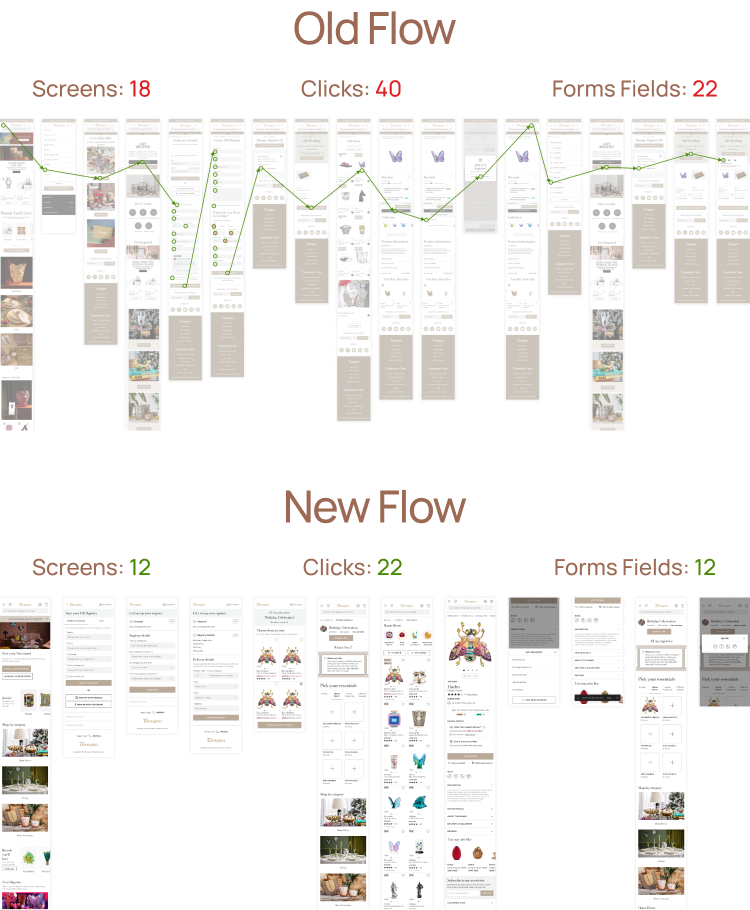
Old flow: 18 screens, 40 clicks, 22 form fields. New flow: 12 screens, 22 clicks, 12 form fields.
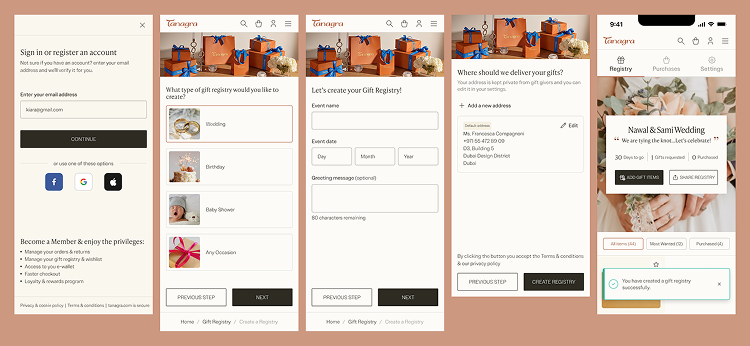
Registry creation flow: sign in, choose event type, set details, confirm delivery address
Solving for the hardest edge cases
Preventing duplicate gifts
Items automatically mark as purchased once a guest completes checkout. A temporary reservation during checkout prevents two guests from purchasing the same item simultaneously. Registry owners can star items by priority, making it easier for guests to select confidently.
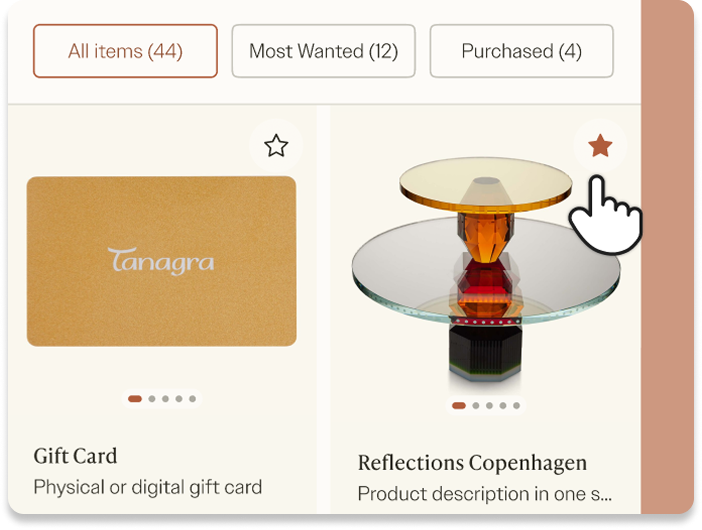
Priority starring and real-time purchased status prevent duplicate gifting anxiety
Supporting different guest budgets
The ideal solution was group gifting, allowing multiple guests to contribute toward a high-value item. That was out of scope for the first release due to development complexity. Instead, we introduced gift cards with personal message fields, giving guests a meaningful way to contribute a specific amount. Group gifting remains documented as a clear next step for phase 2.
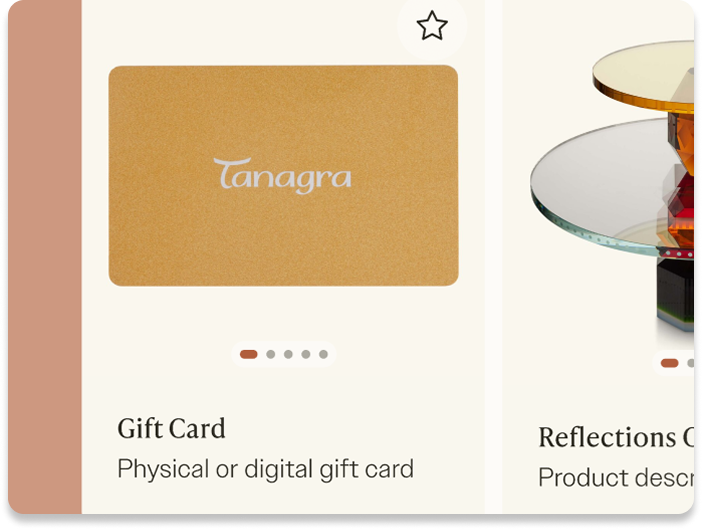
Gift cards allow guests at any budget to participate meaningfully
Registry management for owners
A simple dashboard lets couples edit event details, share their registry link, and track what has been purchased, designed to work for someone planning a wedding with a hundred other things on their mind.
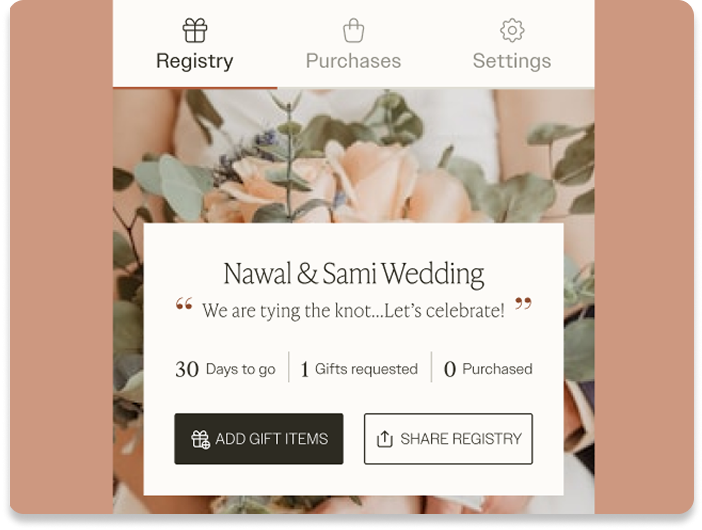
Registry management: event details, sharing controls, and purchase tracking in one place
Guest-facing experience
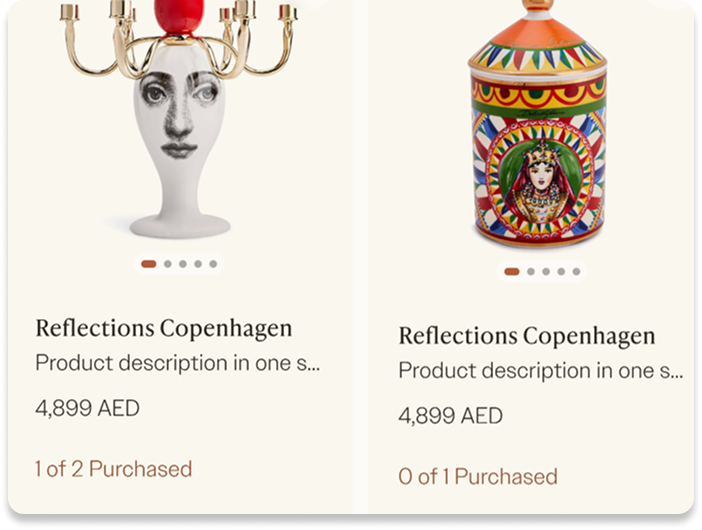
Guest view: clear availability, purchase status, and priority items surfaced first
End-to-end prototype: registry creation through guest purchase
A new revenue channel from launch
Post-Launch (3 months)
The registry launch gave Tanagra direct participation in GCC wedding and milestone gifting occasions for the first time. Key metrics being tracked include registries created, visitor-to-purchase conversion, average gifts per registry, and new customer acquisition through the guest flow.
Complexity is a design problem too
The hardest part of this project was not the UI. It was mapping every edge case across two user types simultaneously. When you design for both the person creating the experience and the person receiving it, every decision ripples both ways. The flow reduction numbers came directly from questioning every step: does this serve the owner, the guest, or just the system?
We also had to make peace with shipping a good v1 rather than a perfect one. Group gifting was the right feature, but building it correctly would have delayed launch by months. Documenting it as a clear next step rather than a compromise meant the business had a roadmap, not just a constraint.